Traditional Cozy Soft Lighting and Permanent LED Lights Installation for Classic Style
There is a specific sort of outside lighting that never feels dated. It does not shout from the roofline or press shade for the sake of novelty. It just settles onto a home with peaceful confidence, giving the architecture form after dark and making the whole home feel looked after. That appearance normally boils down to one option greater than any type of various other: classic cozy soft lights.
Homeowners commonly start the discussion by inquiring about ease or toughness, especially when they are thinking about Permanent LED Illumination Installation. Those are sensible problems. No person intends to drag ladders out every period, replace half a strand in freezing weather, or discover that the lights that looked classy on the internet feel harsh and industrial on their own residence. But the genuine choice is aesthetic. The objective is not just to make illumination easy, it is to make it belong.
Done well, long-term illumination goes away in daylight and includes deepness in the evening. Done inadequately, it can flatten attractive trim, reveal every roofline seam, and make a meticulously created home look like a retail storefront. The distinction generally has less to do with the innovation itself and more to do with shade temperature level, component placement, cord management, dimming control, and restraint.
Why cozy light still wins
Warm light has remaining power due to the fact that it complements the products most homes are constructed from. Brick reads richer under warmer tones. Natural timber, rock, painted trim, copper rain gutters, and also dark house siding all tend to look more refined when lit up with a soft amber-white rather than a stark blue-white.
In useful terms, many homeowners who desire a classic appearance gravitate towards shade temperature levels in the community of 2200K to 3000K. There is no magic number that suits every residence, but that array usually stays clear of the clean and sterile actors that can make a house seem like a parking lot cover. If the residential or commercial property has standard design, older stonework, or warm-toned exterior coatings, approaching the reduced end of that variety usually creates a gentler, extra complementary effect.
I have seen this play out repeatedly on site check outs. A homeowner will certainly claim they want something "bright adequate to be seen," which is understandable, especially if they are changing short-lived strings that often get shed versus dark eaves. After that a test section increases in an amazing white tone, and the reaction is instant. The roofline stands out, yes, but the house itself feels chillier. Swap that same section to a warm soft setting and unexpectedly the columns, soffits, and gables restore their character.
Brightness matters, yet warmth forms perception. People have a tendency to linger around lights that feels comfortable. They admire lighting that really feels intentional.
Permanent does not have to suggest flashy
The phrase Long-term Vacation Lights sometimes brings a very particular picture to mind: color-changing light bulbs, animated patterns, and app-controlled scenes for every vacation on the calendar. Those systems absolutely have a place. They are fun, versatile, and progressively trusted. Yet many house owners overlook a quieter truth. The very same facilities that can commemorate a holiday can also give classy architectural illumination every night of the year.
That is where Irreversible LED Lighting Installment comes to be a lot more interesting than seasonal décor. An effectively made system can move between functions. In December, it might support festive scenes. In the other eleven months, it can work out right into a polished warm white profile that offers the home deepness and existence. The modern technology is adaptable, yet the aesthetic identity remains grounded.
The best jobs deal with programmable shade as an alternative, not the entire personality of the setup. If your house only looks good when the lights are animated, the design misreaded. A solid lights strategy need to look beautiful in its most basic setting, with static traditional cozy soft lights at a controlled intensity.

What timeless beauty actually looks like on a house
Timeless lights is rarely consistent in a simplified way. It is balanced. It values the architecture as opposed to tracing every line with the very same aesthetic weight.
For instance, a lengthy cattle ranch home with a reduced roofline gain from refined continuity and a mild clean of warm light that maintains the structure from vanishing right into the landscape. A high colonial or artisan can take care of much more vertical focus, particularly around entrance functions, dormers, or a main gable. A modern farmhouse frequently looks best when the lights sustains the proportion without over-illuminating the garage.
The typical string is percentage. If every eave is similarly brilliant, the eye has nowhere to rest. If the front entrance is underlit while second lines blaze away, your home loses pecking order. Great permanent lights produces order after dark. It aids a site visitor recognize where to look first, where to walk, and what makes the architecture special.
The details that separate sophistication from excess
A timeless installation usually relies on a handful of layout choices collaborating:
- Conceal the components so the light is seen greater than the equipment
- Choose cozy white as the default scene, with dimming readily available
- Match illumination to the home's range rather than maxing out output
- Emphasize significant architectural lines, not every possible edge
- Keep spacing regular, specifically on extremely visible front elevations
None of these factors are complicated on paper. In method, nonetheless, each needs judgment. Two-inch adjustments in setback can alter glare. Component spacing that looks even from a ladder may check out irregular from the street. A setup that really feels tasteful at 8:00 p.m. May be too bright by 11:00 p.m. When the neighborhood has actually gone quiet.
That is why mockups issue. On better tasks, installers examine a tiny area at sundown as opposed to making assumptions completely daylight.
The composition of an excellent Long-term LED Illumination Installation
Homeowners frequently focus on the visible outcome, yet the unnoticeable decisions identify whether the system will certainly mature well. Installing method, cable television directing, controller location, weatherproofing, solution access, and power preparation all issue just as much as the light output.
A tidy installment usually begins with positioning under soffits, fascia lips, or trim details that shield the diode from direct sight. This is not just concerning appearance. Secured positioning softens the impact and reduces identifies of glare when someone comes close to from the driveway or sidewalk. If the fixtures are also exposed, even warm soft lights can really feel sharp.
Wire monitoring is another area where craftsmanship shows. On a well-finished home, careless cabling sticks out quickly in daytime. The very best installers course discreetly, color-match where suitable, and stay clear of creating upkeep headaches by hiding critical links where they can not be gotten to later.
Power and control systems are entitled to equal focus. A huge property might need zoning to make sure that long rooflines, entry locations, garage wings, and landscape-adjacent sections can be managed intelligently. This is not only valuable for custom scenes. It additionally assists with repairing and keeps voltage efficiency much more secure across the system.
Weather exposure includes another layer. South-facing altitudes, coastal air, hefty snow areas, and high-heat attic-adjacent soffits each put various anxiety on products. An item that carries out well in one environment might require extra care or a various installing approach in another. That is one factor blanket advice online tends to disappoint. Climate constantly gets a vote.
Warm light and LED technology are no more at odds
Years ago, some irreversible systems battled to imitate the inviting high quality of conventional incandescent vacation lights. The output might really feel also crisp or too digital, specifically when checked out directly. That gap has actually tightened significantly. Better diode quality, stronger diffuser layout, and extra nuanced controllers have made it possible to accomplish a softer visual outcome, especially when cozy white channels are adjusted properly.
Still, not every LED system creates the same type of warmth. Some "warm white" presets lean peach, others wander green at reduced dim degrees, and some lose their elegance when viewed from a range because the spacing or lensing produces a populated result instead of a continuous glow. This is one location where seeing actual set up instances helps greater than reviewing specifications.
I normally motivate home owners to ask what the system resembles from 3 placements: straight under the eave, nearby, and from an angle as they draw into the driveway. A lighting setup can do wonderfully from one of those perspectives and let down from another. The objective is uniformity in lived experience, not just a good photograph.
The duty of dimming, timing, and seasonal restraint
One of the biggest advantages of Irreversible Holiday Lights is control. Ironically, that same flexibility creates several unsatisfactory results. Just because a system can display loads of colors and full illumination does not suggest it should.
Warm white lights frequently looks best when lowered below what newbie customers expect. A somewhat lower setting gives your home a radiance as opposed to a glow. It also reads as extra expensive. Deluxe https://wetratedluminaires779.wordcanopy.com/posts/classic-warm-soft-lights-for-every-single-season-permanent-lighting-that-never-ever-goes-out-of-style hotels and high-end residential projects have recognized this forever. Comfy light is usually not the brightest light available.
Timing likewise changes exactly how illumination is viewed. A front altitude that looks welcoming from sundown to 10:00 p.m. May feel excessive if it sheds the same until dawn. Smart scheduling allows a residence to be aesthetically existing throughout the active night hours and quieter later in the evening. Some proprietors make use of one degree for dusk to going to bed, then step down immediately. That is a subtle step, but it makes the home really feel much more advanced and considerate.
Seasonal restraint matters too. A home can absolutely move into even more celebratory scenes for vacations and unique occasions, but those moments feel extra special when they contrast with a stylish everyday standard. If the system is always operating at phenomenon setting, the novelty fades quickly.
Matching the illumination to the architecture
An illumination design that flatters a Tudor rebirth might not match a smooth modern construct. The architecture ought to inform you where to be strong and where to hold back.
Traditional homes frequently gain from warmth, gentleness, and solid interest to proportion. The front door, deck columns, and principal roofline deserve visual top priority. Accent illumination can support dormers or peaks, but the treatment should continue to be measured.
Contemporary homes typically request accuracy. Cleaner lines, much deeper overhangs, and darker exteriors can bring a somewhat crisper presentation, though warm white still has a tendency to feel even more domestic and less institutional. On these buildings, also spacing and flawless positioning ended up being especially vital due to the fact that the architecture itself is so exacting.
Rustic and farmhouse designs reward warmth maybe greater than any kind of other group. These homes can look lovely with traditional cozy soft lights that echo the familiar convenience of incandescent veranda lamps. However they can likewise look exaggerated quickly if every barn-style line and second gable is lit up at equal strength.
If a residence has multiple masses, such as a main body, a garage wing, and a deck enhancement, the lights needs to recognize that pecking order. The main body usually is entitled to prominence. The garage can support, not control. This appears evident, yet lots of installments accidentally make the garage the celebrity since it offers the lengthiest continuous roofline.
What homeowners should ask before working with an installer
The top quality space in this sector is actual. Products differ, yet workmanship differs even more. A homeowner does not need to become an illumination designer, though a couple of practical inquiries can disclose whether an installer is assuming past a fast sale.
- Where will the components sit, and will certainly they show up from the street in daylight
- What warm white array does the system create, and can it be lowered quickly
- How are cables, ports, and power materials safeguarded and accessed for solution
- Can the installer program regional instances of homes using understated day-to-day setups
- What is covered if an area stops working, discolors, or acts inconsistently over time
The solutions matter. So does the confidence behind them. Experienced installers generally discuss trade-offs without overselling excellence. They understand older soffits may need added treatment. They recognize high peaks or blended products can complicate proportion. They understand that app comfort does not make up for inadequate physical layout.
A trustworthy specialist likewise talks about what not to light. That is commonly the clearest sign they care about the final appearance.
Budget, worth, and where the money really goes
Permanent LED Illumination Installation is not a bargain-bin acquisition, and it should not be examined like short-lived seasonal style. Prices depend on linear footage, roof intricacy, access, controller elegance, product quality, and local labor prices. A straightforward single-story run is one thing. A multi-gable two-story exterior with hard accessibility and several power zones is another.
What home owners are really paying for comes under three classifications: the hardware, the setup ability, and the lasting convenience. The equipment obtains attention because it is tangible. The installment ability deserves even more of the credit history. Tidy placement, durable attachment, very discreet circuitry, correct weatherproofing, and trustworthy control arrangement are what establish whether the system still seems like a good decision years later.
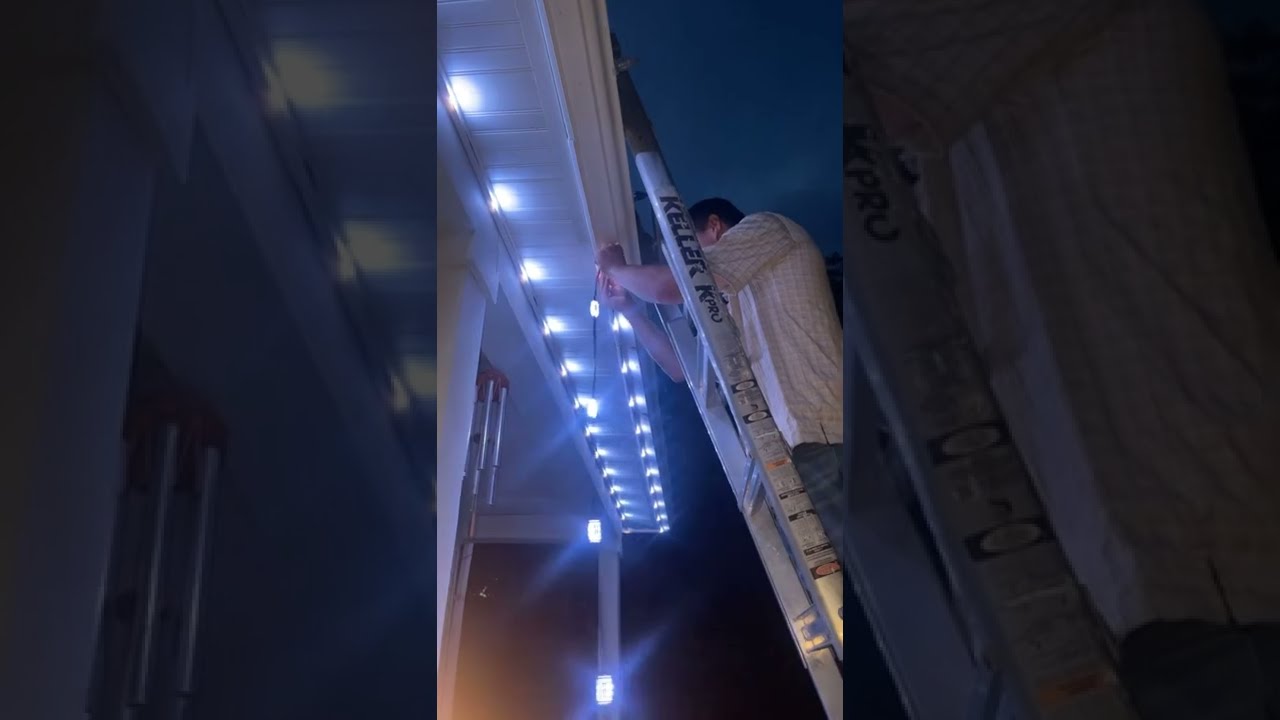
There is additionally a worth component that does not show up neatly on a spread sheet. Seasonal setup and elimination lug their own expenses, whether measured in expert service charge, individual time, or physical danger. For several families, particularly those with taller homes or minimal flexibility, removing ladders is not a luxury. It is the whole point.
The return is not totally useful, though. A well-lit home adjustments how the residential or commercial property is experienced. It can make an access really feel warmer, an exterior feel much more ended up, and night aesthetic appeal feel intentional instead of accidental.
Common mistakes that age a lighting job quickly
The first mistake is selecting trendy white because it seems brighter during a demo. It often is brighter, at the very least perceptually. It is additionally more probable to really feel dated or commercial in time on a residence.
The secondly is over-lighting. Numerous homes need much less strength than their proprietors expect. When the eye can see each factor resource plainly from the curb, the layout usually requires either a lot more concealment, more dimming, or both.
The 3rd is overlooking daytime look. Irreversible systems reside on the home 365 days a year. If the track, lens, or cable is aesthetically invasive in sunshine, the job endangers the exterior even when the lights are off.
The fourth is chasing fad scenes at the expense of an elegant default. If the app has lots of results yet the warm white setting looks weak, extreme, or irregular, the system will not deliver the ageless elegance most proprietors in fact want.
Finally, poor maintenance planning catches up with people. Every permanent system ultimately needs some service. Components age. Tornados take place. Firmware adjustments. If gain access to is difficult or documentation is missing out on, small issues become pricey ones.
A home ought to still feel like itself at night
That is the standard I go back to frequently. Excellent lights discloses your home. Excellent lighting maintains its identity.
When house owners pick traditional warm soft lights for their permanent system, they are typically responding to that reaction, even if they do not phrase it this way. They desire ease, yes. They want the adaptability of Irreversible Holiday Lighting, yes. But more than that, they want the house to stay stylish, acquainted, and inviting after sunset.
The technology has actually gotten to a point where that is really achievable. A Permanent LED Lights Setup no more has to look theatrical or momentary. With cautious layout, thoughtful positioning, and self-displined control settings, it can become part of the design itself, almost invisible by day and quietly transformative by night.
The homes that age best with permanent lighting are not always the greatest or the newest. They are the ones where somebody made a series of reasonable, controlled choices. Heat over glare. Proportion over unwanted. Craftsmanship over shortcuts. Those selections rarely order focus in a display room, yet they are precisely what develops the type of nighttime beauty that still really feels ideal 5 years later.